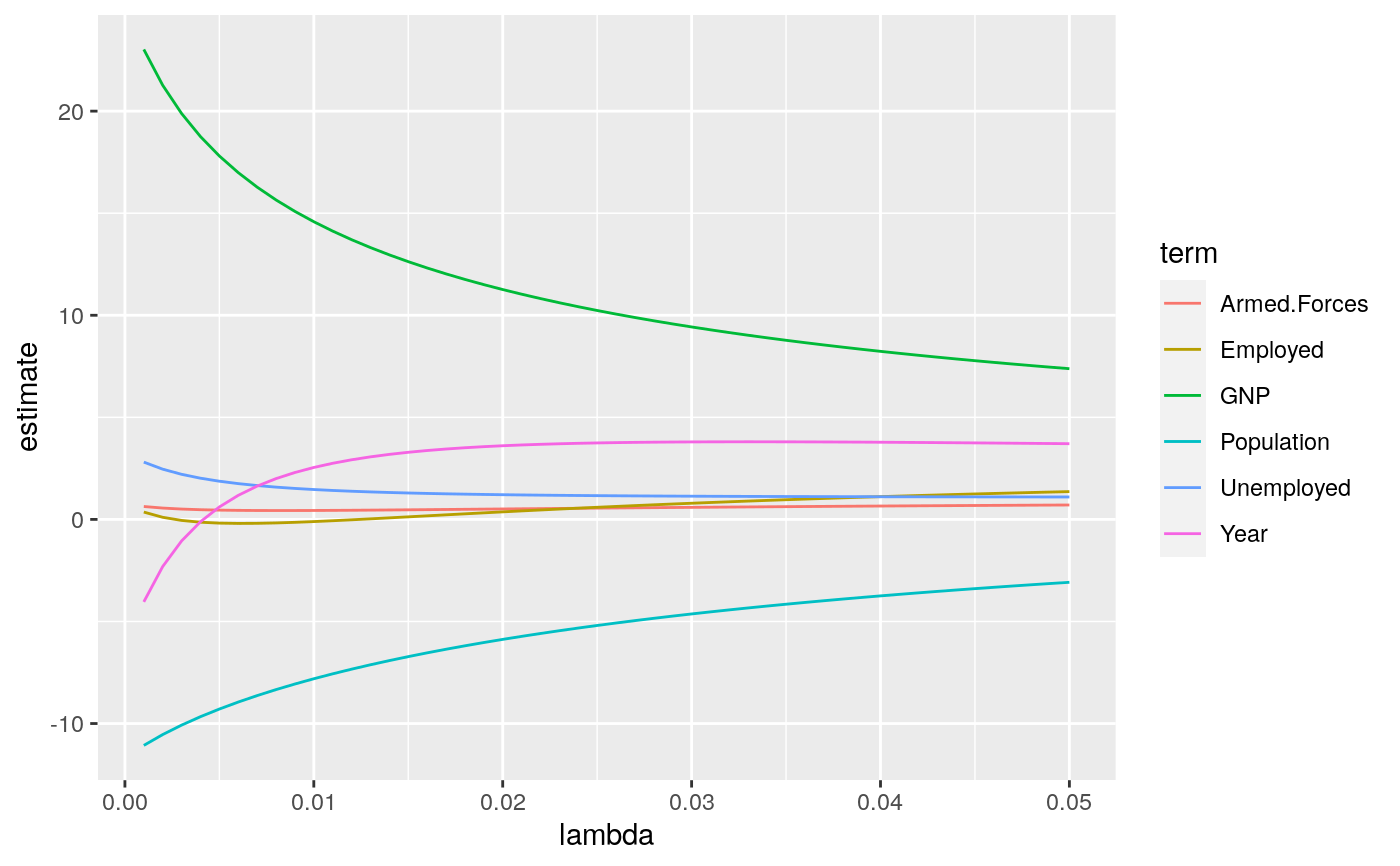
Tidy summarizes information about the components of a model. A model component might be a single term in a regression, a single hypothesis, a cluster, or a class. Exactly what tidy considers to be a model component varies across models but is usually self-evident. If a model has several distinct types of components, you will need to specify which components to return.
# S3 method for ridgelm
tidy(x, ...)
Arguments
| x | A |
|---|---|
| ... | Additional arguments. Not used. Needed to match generic
signature only. Cautionary note: Misspelled arguments will be
absorbed in |
See also
Other ridgelm tidiers:
glance.ridgelm()
Value
A tibble::tibble() with columns:
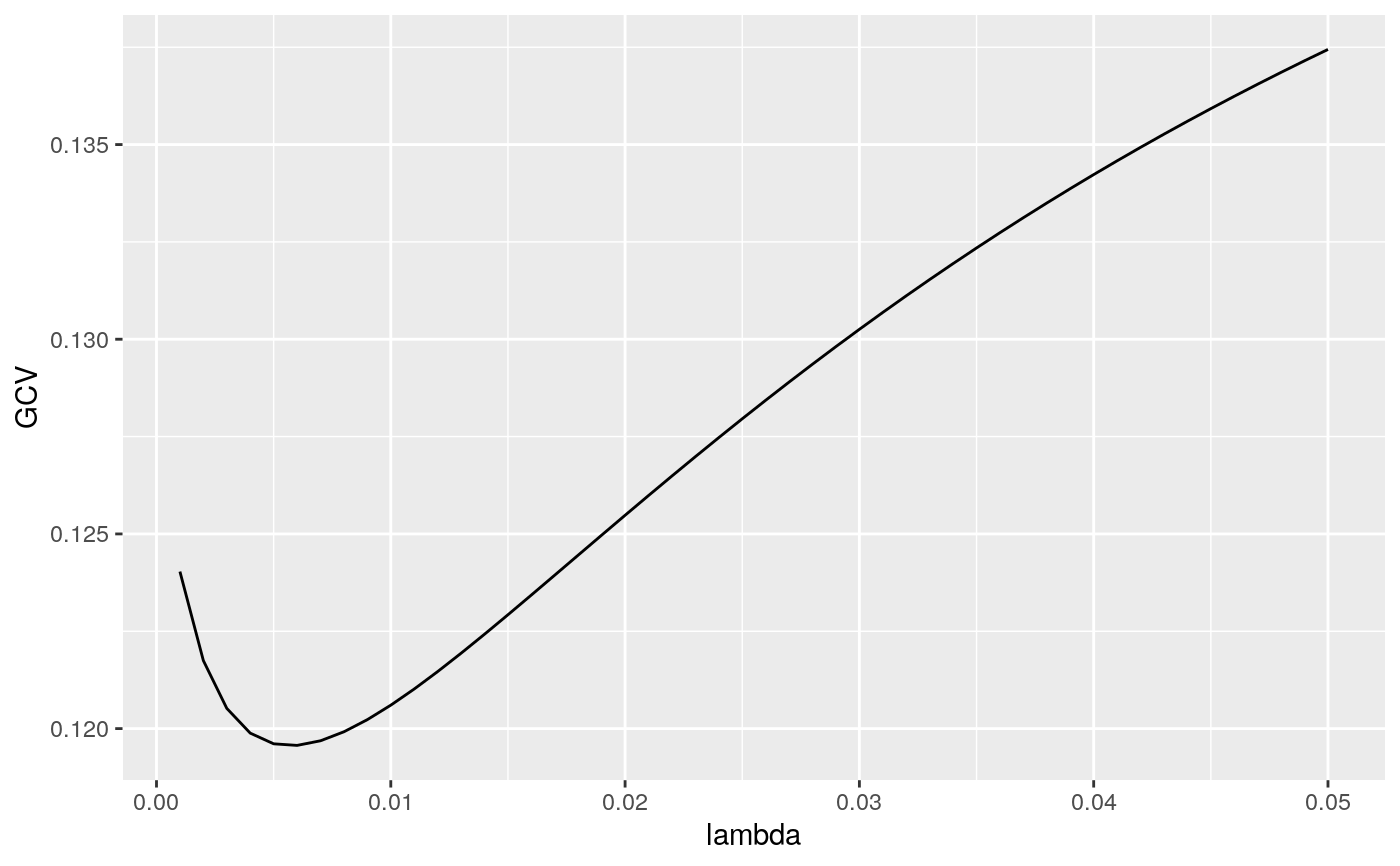
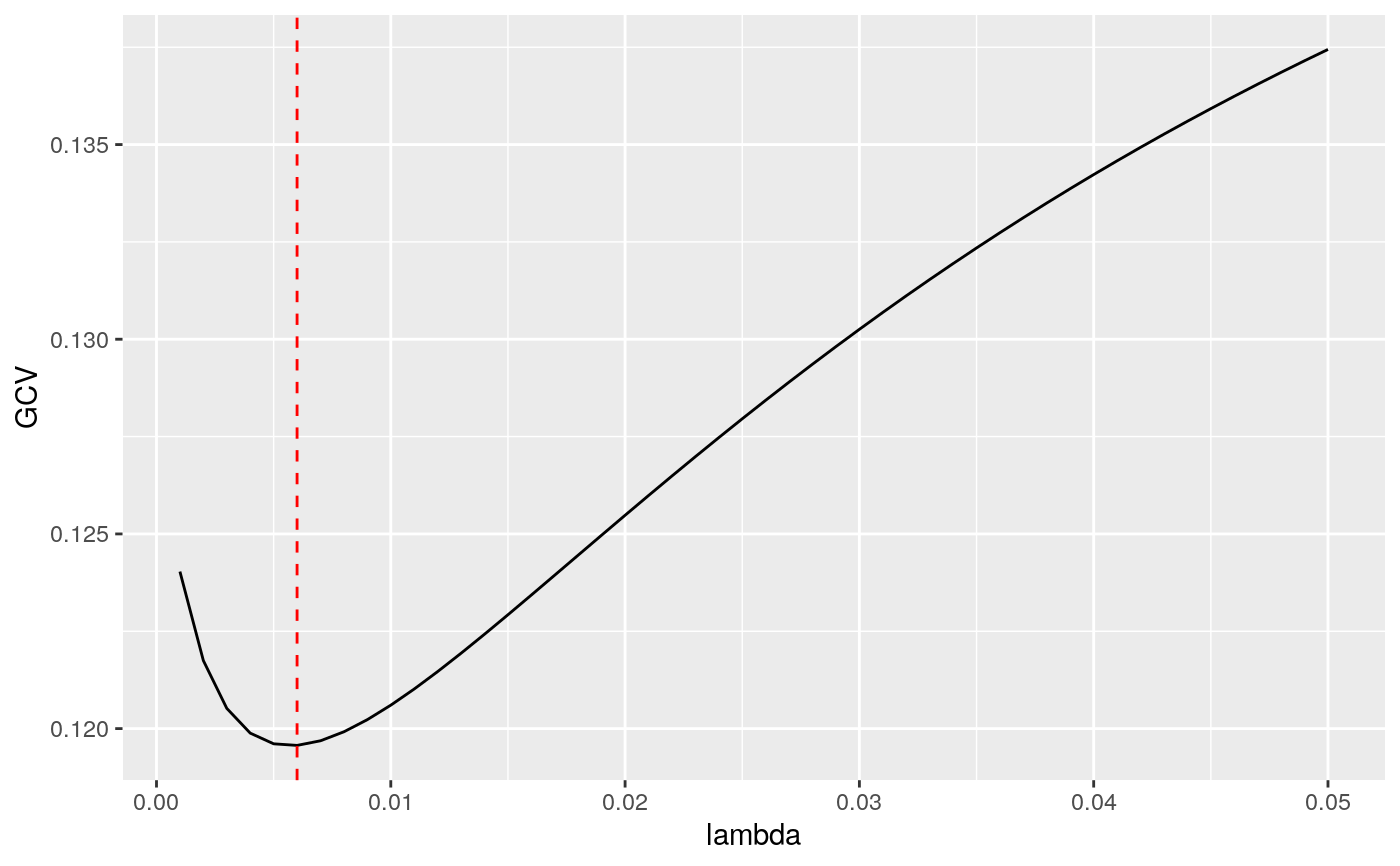
Generalized cross validation error estimate.
Value of penalty parameter lambda.
The name of the regression term.
estimate of scaled coefficient using this lambda
Scaling factor of estimated coefficient
Examples
#> # A tibble: 6 x 5 #> lambda GCV term estimate scale #> <dbl> <dbl> <chr> <dbl> <dbl> #> 1 0 0.128 GNP 25.4 96.2 #> 2 0 0.128 Unemployed 3.30 90.5 #> 3 0 0.128 Armed.Forces 0.752 67.4 #> 4 0 0.128 Population -11.7 6.74 #> 5 0 0.128 Year -6.54 4.61 #> 6 0 0.128 Employed 0.786 3.40fit2 <- MASS::lm.ridge(y ~ ., longley, lambda = seq(0.001, .05, .001)) td2 <- tidy(fit2) g2 <- glance(fit2) # coefficient plot library(ggplot2) ggplot(td2, aes(lambda, estimate, color = term)) + geom_line()# add line for the GCV minimizing estimate ggplot(td2, aes(lambda, GCV)) + geom_line() + geom_vline(xintercept = g2$lambdaGCV, col = "red", lty = 2)