For certain parameters, a length value is required. Examples include the
setting of font sizes (e.g., in cell_text()) and thicknesses of lines
(e.g., in cell_borders()). Setting a length in pixels with px() allows
for an absolute definition of size as opposed to the analogous helper
function pct().
px(x)
Arguments
| x | the numeric value to format as a string (e.g., |
|---|
Value
A character vector with a single value in pixel units.
Figures
Function ID
7-3
See also
Other Helper Functions:
adjust_luminance(),
cell_borders(),
cell_fill(),
cell_text(),
cells_body(),
cells_column_labels(),
cells_column_spanners(),
cells_footnotes(),
cells_grand_summary(),
cells_row_groups(),
cells_source_notes(),
cells_stub_grand_summary(),
cells_stub_summary(),
cells_stubhead(),
cells_stub(),
cells_summary(),
cells_title(),
currency(),
default_fonts(),
escape_latex(),
google_font(),
gt_latex_dependencies(),
html(),
md(),
pct(),
random_id()
Examples
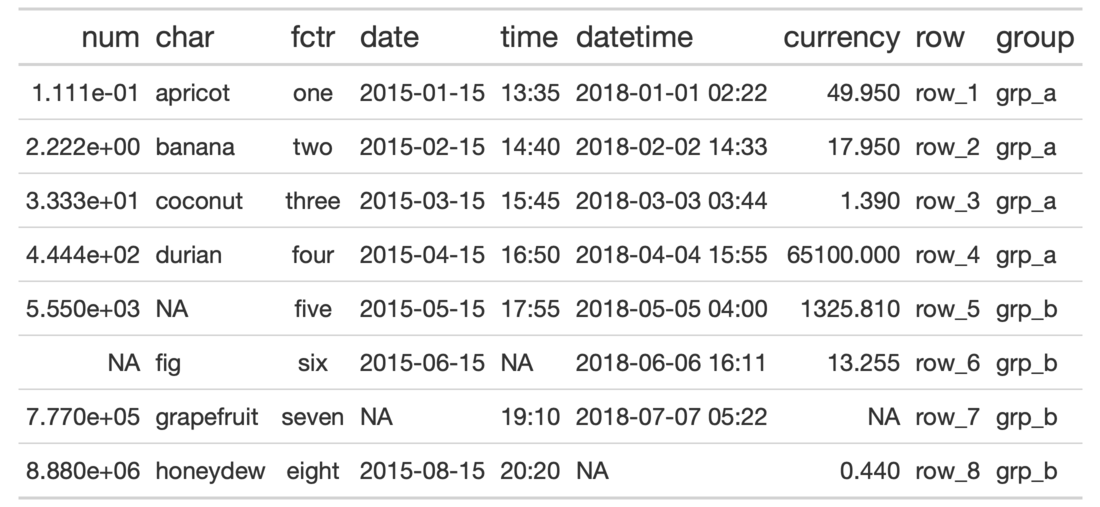
# Use `exibble` to create a gt table;
# use the `px()` helper to define the
# font size for the column labels
tab_1 <-
  exibble %>%
  gt() %>%
  tab_style(
    style = cell_text(size = px(20)),
    locations = cells_column_labels()
  )